Fitness Exposé

Bodybuilding Secrets Exposed

  • Facebook
  • Flickr
  • LinkedIn
  • Pinterest
  • RSS
  • Twitter
  • YouTube
  • Home
  • Articles
    • Training
    • Diet & Fat Loss
    • Supplements
    • Experiment
    • News
    • Resources
    • Reviews
    • Contest Prep
  • Podcast
    • Fitness Freedom
  • Coming!
You are here: Home / 2010 / Archives for June 2010

Archives for June 2010

Let’s Talk Oranges

June 24, 2010 By Narina Leave a Comment

I rarely drink fruit juice except on the odd occasion when we are out for a special brunch and then I may have a glass or orange or my favourite – grapefruit juice.  But, we should keep in mind that fruit juices are not the best
source of getting our nutrition.  Fruit juices are basically empty calories loaded with sugars.  The best way to enjoy your fruit is still whole and not juiced.  Let's compare fruit juice (orange) to the whole orange.  Information provided via www.sparkpeople.com
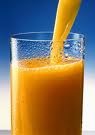
 

orange juice

Calories in Tropicana Orange Juice – Serving Size: 1 serving

Calories 110.0
Total Fat 0.0 g
Cholesterol 0.0 mg
Sodium 0.0 mg
Potassium 450.0 mg
Total Carbohydrate 26.0 g
      Dietary Fiber 0.0 g
      Sugars 22.0 g
Protein 2.0 g    Vitamin A 0.0 %    Vitamin B-12 0.0 %
Vitamin B-6 6.0 %      Vitamin C 120.0 %    Vitamin D 0.0 %     Folate 15.0 %     Iron  0.0 %           Magnesium 6.0 %
  Manganese 0.0 %       Niacin         4.0 %    Pantothenic Acid  0.0 %                Thiamin 10.0 %      Zinc 0.0 %


oranges


Now, let's compare a whole orange:

Calories:  62
Total Fat:   0.2 g               Total Carbohydrates:  15.4g
Cholesterol  0   g                      Fiber:  3.1 g
Sodium       0   g                      Sugar: 12.2 g
Protein     1.2  g              

Vitamin A – 6% of RDA            Calcium:   5% of RDA      Iron:  1% of RDA            Vitamin C:  116% of RDA  

As you can see, the benefits of eating the whole orange as opposed to the juice are:

1)  reduced overall calories
2)  reduced calories from sugar
3)  increase in Protein, Fiber
4)  increase in Vitamin A, Iron, Calcium and Vitamin C

This is just a quick overview of juice vs whole fruit.  The odd glass of juice is not a worry, but try not to make a habit of getting your fruit nutrition in the form of juice – enjoy the whole fruit. 


Till next time,

Narina

Related Posts:

  • No Related Posts

Filed Under: Fitness

Persistence in Training

June 10, 2010 By Michael Mahony, ISSA CPT Leave a Comment

Yesterday we had a discussion about consistency in training. That is obviously a key element in successful training, but there will come a time when it isn't enough.

What To Do When You're Not Motivated

Motivation and inspiration are often thought of as being the same. The fact is that inspiration most often comes from an external source while motivation always comes from within yourself (see articles by Anthony Robbins for more). This is where persistence comes into play.

There will come a time when you will be too tired to hit the gym. It is that very moment that you need to pull out your persistence behavior. Don't let yourself give in to the urge to skip your training session. Being persistent will build mental strength. Being persistent will take you to the next level.

Coupling this persistence with consistency will simply explode your results.  The persistent behaviors you establish will take your training to places you never dreamed possible.  People have achieved incredible things just by being persistent.  You have to be persistent like the squeaky wheel.

What To Do When You Hit a Plateau

It is here where your persistence pays off te most. Do not give up. Do not be afraid to try some new approaches. Drop your weight lower and start the progression again. With persistence you will see that breaking through your plateau is not impossible.

Too many people simply give up and still too many others just bash their head into the plateau.  This is not the right approach.  A persistent effort to overcome the plateau is required to see progress.  With persistence you will get to the other side of the plateau.

I have a saying that I got from my good friend, Carlos Dejesus.  My saying is “Go beyond!”  This means push past the pain you feel in your muscles.  As long as you can move the weight you should move the weight.  Persistent behavior requires that you endure some pain.  Don't back down!

If you do both of these things you are going to see improvements purely because of persistence.

Related Posts:

  • How to insure consistency in your training
  • Keys to Your Success: Consistency
  • Saturday Sharing: How to Have the Time to Train
  • What Makes the Biggest Difference to Your Training?
  • Keys to Consistent Results

Filed Under: Training

Consistent training techniques

June 9, 2010 By Michael Mahony, ISSA CPT 1 Comment

In the past, one of the most common questions I've been asked is how to be consistent with a training program.  I get asked this question in person as well as on Twitter.  The answer isn't as simple as you might think.

I admit that this seems like a very simple question to answer, but the reality is that it is an extremely complicated topic.  Consistency takes alot of discipline.  It is difficult to describe consistency without including discipline in the process.  I have 3 steps for achieving consistency in your training.  These techniques will create the consistency habit that you crave.

1.  Read accountability or transformation blogs for inspiration

If you do a Google search for physique transformations you are bound to find several physique transformation contests.  The people who do well with these types of contests are extremely consistent with their diet and exercise.  They also tend to have extremely inspiring stories.  The reason The Biggest Loser is so popular on television is that people get inspired by watching someone lose a ton of weight.  The same is true of most physique transformation stories.  Who can look at those before and after pictures and not be inspired?  Those results scream of consistent behavior.

2.  Implement a reward system

All decisions in life are based upon pleasure and pain.  When we perceive that the pain of doing one thing will be worse than the pain of doing another thing, we are conditioned to choose the thing that hurts the least.  If you want consistency in your fitness regimen set up a reward system.  Reward your consistent behavior.  Make sure that the rewards are sufficient to bring you the pleasure you want.  You have to make it so that what you get for being consistent makes you feel far better than what you get for lacking consistency.  Find that balance and you will see your consistency soar to new heights.  You will soon find your goals are within reach.

3.  Get a training partner

When you know someone will be waiting for you at the gym at 5 a.m. you are going to consistently get up and make the trip to the gym.  Nothing will stop you.  I personally have days where I want to skip a workout and I tend to overcome those urges.  However, the one day that I have the least difficulty in overcoming that urge is Saturday workouts.  What makes Saturday such a consistent day?  There are two things:  (a) my workout partner always meets me on Saturday mornings; and (b) my wife is counting on me to get her a pass to spinning class right at 6:30 a.m.  If I am not consistent I let both people down and that just is not an option.

Conclusion

By reading inspirational stories, setting up a rewards system and having a training partner you will see your consistency rise to new levels.  Another way to be more consistent is to write an accountability blog as well.  As consistency is the main ingredient to a successful physique transformation, you will be on your way to major body changes.  The more consistent you get the easier it will be because you will have developed a habit.  The habit of consistency is a great one to have.

Related Posts:

  • No Related Posts

Filed Under: Fitness

When Is the Right Time?

June 3, 2010 By Michael Mahony, ISSA CPT 1 Comment

Starting a fitness program? Have you decided when your new nutrition approach should be implemented? I'm sure you or someone you know has been guilty of this. At some point you've heard or uttered the phrase “I plan to start working out when…”. Why must you wait? Will the time ever really be right for you to start that weight training program? Just like you should never let giving up be an option, you should never be indecisive about starting your program.

Putting off your workouts because of illness or injury is one thing, but waiting until the time is right is just wrong. If you're not ready to start now, what makes you think you will be ready to start later? What if I told you that you should just get started? Would you believe me? Remember, there are major benefits to your metabolism.

That's right. I said just get started. Once you get started the habit building can begin. You will see your results faster which will keep you on track. It is just top easy to continually push off the start of a fitness program. Weight training requires consistency and you will never achieve that if you don't get started. The first step is to get into the gym and do your first workout.

I speak from experience. I have, at times, realized that I needed to make changes on a Wednesday, but waited until Sunday to implement them. That never makes me feel right. The times that I see the need for change and then get started that day are the times I do the best work and give the best effort. There is just something about not procrastinating that gets me pumped up!

You can also create accountability through others. I personally maintain an accountability blog. This keeps me focused and I tend to get started on changes much faster.

What are you waiting for? Do your planning and then get started on that plan right away. Step up to the plate today! Do not delay any longer. You will be glad you got started.

Related Posts:

  • How to Find Time to Workout
  • 5 Tips for Staying Motivated
  • Plan Your Training Success

Filed Under: Fitness

Hearty News

June 1, 2010 By Narina 2 Comments

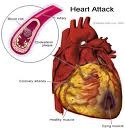
The heart – often talked about in both medical and romantic terms.  The heart is a muscle that is responsible for pumping blood full of oxygen to the rest of our bodies to provide that essential element to our survival.  But, did you know the heart is a muscle – capable of getting stronger and more powerful?  But, we can also die from a broken heart – not just in the romantic terms but in medical terms as well.

If you want to live a long time and enjoy all the joys that life has to offer, you need to pay attention to your heart.  And if you want to age well and be able to enjoy life to its fullest, you must exercise on a regular basis.  The heart as well as all the muscles of our body responds best to consistent and regular exercise.  Don't think weekend warrior because that is actually doing more harm than good.  Think more moderate exercise stretched throughout your week.  You body and especially your heart will thank you.  So just how does the heart benefit from exercise?  A normal heart is a strong muscular pump that during a lifetime will beat more than 2.5 billion times.  The average heart rate of an adult is 70 beats per minute.

jogging hearts

When we exercise, the heart responds to this exercise by getting stronger.    Just like your biceps or leg muscles get stronger when you exercise, the heart responds the same way.  During exercise the blood flow from the heart to the rest of the body can increase tremendously.  With a stronger heart muscle, it is now capable of meeting the needs of the hungry exercising muscles.   The increased flow of blood to the body is achieved by two methods – the rate by which the heart beats will increase and the amount of blood that it pumps each beat will also increase.  Because exercising increases the heart muscle's strength it will push out more blood.

Also as the heart becomes stronger in its ability to pump more blood with each beat, it will have to beat less when in a resting state.  This is why endurance athletes have a low resting heart rate.  Their heart muscles are so strong from the demands of their sport and in some athletes the resting heart rate will be in as low as 30-40 beats per minute.  This adds up over the course of a life span.  During exercise the oxygen needed by the heart muscle itself also increases.  But, the heart is an amazing organ in design.  Our bodies contain tiny little organs throughout that are often call the “furnaces of the cell” because these little organs provide energy to the muscles through complex chemical reactions that take place constantly.  The heart muscle contains a larger number of these little organs called mitochondria.  More than the rest of our muscles and this means the heart is not as easily fatigued as muscles throughout the rest of our body.

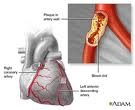
Our heart can also be affected by (or broken) by several medical conditions (obesity, diabetes, high cholesterol, hardening of the arteries), poor diet and lack of exercise.  If you want to live a long and productive life, able to enjoy activities and family then it is essential you take care of your heart.  Moderate exercise, proper diet and maintaining a healthy weight will keep your heart beating for a long time to come.

heart atherosclerotsis

Till next time,
Narina
http://victoriawellness.com

Related Posts:

  • 120/80 – Blood Pressure and Hypertension
  • 5 Reasons to Lift Weights
  • Y3T Training System: Looking Back
  • Why Y3T was my training choice
  • How to Succeed by Knowing Your Body

Filed Under: Fitness

News

Toronto Pro Supershow 2016

June 12, 2016 By Michael Mahony, ISSA CPT Leave a Comment

IFBB Arnold Africa 2016

June 9, 2016 By Michael Mahony, ISSA CPT Leave a Comment

IFBB California Pro 2016

June 5, 2016 By Michael Mahony, ISSA CPT Leave a Comment

Coming Soon!

Featured Video

Regaining Focus!

Find out what I am doing to regain my focus.

We Recommend

Increase the internal rotation of your shoulder with the Rotater

New eBook!

Copyright © 2026 by Fitness Expose