Fitness Exposé

Bodybuilding Secrets Exposed

  • Facebook
  • Flickr
  • LinkedIn
  • Pinterest
  • RSS
  • Twitter
  • YouTube
  • Home
  • Articles
    • Training
    • Diet & Fat Loss
    • Supplements
    • Experiment
    • News
    • Resources
    • Reviews
    • Contest Prep
  • Podcast
    • Fitness Freedom
  • Coming!
You are here: Home / Archives for 2009

Archives for 2009

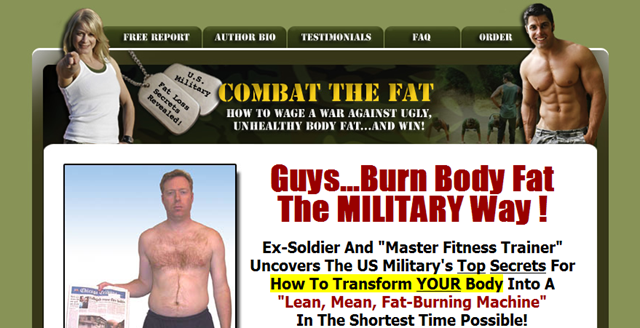
Combat the Fat Week 5 Update

August 10, 2009 By Michael Mahony, ISSA CPT 1 Comment

image

This is the start of my sixth week on Combat the Fat.  The results so far have been good, but not what I wanted, so I am making some changes.  I am not changing the program itself because I want to see how that works, but I am making some adjustments to my eating.

While the program states that there is no need to count calories, I have a feeling that I have been overconsuming calorically.  Thus, starting today I will be calculating my caloric intake.  I will aim to keep it down to 2200 calories.  My maintenance level is 3100 calories, so this will be a nice deficit.  I am also going to add something that I had originally planned to add from the beginning—several sessions each week of Max-OT cardio.  With the amount of cardio already being done on this program, the addition of these intense Max-OT cardio sessions will give me the boost I think is missing from my training.

I have found the nutrition program to be very easy to follow.  As stated, the only flaw I see so far is that he does not have you count calories at all. This is a problem for me because I am hitting this program after coming off of a bulk and I think I’ve lost touch with how many calories will help me cut down.

I can report some definite positive results in my strength through the use of this extremely unorthodox program.  That’s right, I tested my 1 rep max on the flat barbell bench press and it is up about 25 pounds.  My previous max was 205 lbs. and just last week I hit 230 lbs.  I can see changes in my shoulders as well.  I’ve lost 3 inches in my abdominal area and several percent of body fat. 

Being the analytical personality that I am, I’ve learned alot from the approaches to training that this program teaches.  I have learned to push myself even harder than I used to and that (if you have followed my blog) is an accomplishment in itself.

Week 5 of this program saw me go from Advanced Level 1 to Advanced Level 2.  The addition of some exercises in the pyramids caused a massive increase in intensity.  It has been an amazing experience. Just when the workouts were getting routine, there’s a new twist added that takes things to a new level.

Please come back next week for the next installment of the Combat the Fat update.  Find out if the changes I am making work any better.

Related Posts:

  • Combat the Fat Week 12 Update
  • Combat the Fat Week 7 Update
  • Combat the Fat Week 6 Update
  • Listen or Make It Worse
  • The Beat Goes On

Filed Under: Training

Mobility vs Flexibility, Part 1 – What’s the Diff?

August 5, 2009 By Narina 1 Comment

Often during our warm up routines that we have our clients perform at the gym, clients will mention feeling a stretch in certain muscles during some of the drills.   This will then lead to an explanation of what it is we are hoping to accomplish during the warm up and what you should be feeling.   We go through several drills prior to a more dynamic warm up that will lead into the strength portion of your workout.  The drills are specifically designed to increase mobility through a joint.    You need a certain amount of mobility or the ability to move your joints through a normal range of motion.  But what is mobility and what is flexibility?

In a nutshell mobility is the ability of the joint to move through a range of motion and flexibility is the ability of the muscle to stretch to allow movement.  In this article we are going to deal with mobility.  Physical Therapist Gray Cook's (1) analysis of the body and its function is by means of a series of joints.  Each joint has a specific function and is prone to specific dysfunctions.  He devised a table that describes the body on a joint-by-joint basis from the bottom up:

Ankle Mobility
Knee Stability
Hip Mobility
Lumbar Spine stability
Thoracic Spine mobility (upper back)
Gleno-humeral stability (shoulder)

?
As you can see from this chart the joints alternate between mobility and stability.  Injuries and problems occur when the joints lose the ability to perform their specific function be it mobility or stability.    For our clients we will go through ankle range of motion testing.  To do this we have clients kneel on the floor in a lunge position.  We then ask them to push forward with their knee over their toe, keeping the heel down.  We then used a stick from knee to ground to measure distance the knee moved past the toes.  We know that a good range of motion for the ankle is 4″ or more past your toe.  If your ankle lacks the mobility it needs, when  we ask you to perform exercises such as squats or lunges, you either will not be able to perform these exercises correctly , or you will get knee pain when you do perform them.  For this reason, we have included 3 specific ankle mobility drills (ankle rolls, knee to wall, toes on foam roller) in our warm up routine.  We also know in our own unscientific test that performing these ankle drills does work.  We had one client go from 1/2″ ankle mobility to 3″ ankle mobility in both ankles in a 3 month period.

The hips must be mobile in all planes of movement (front to back, side to side and rotational).  If the hip loses its ability to be mobile, you get low back pain.  Most lower back pain is not caused  by a weak back, it is most often caused by a tight and immobile hip.  To work on increasing hip mobility, we will go through a series of hip drills (leg swings front to back and side to side; wide squats).  With some clients we will also use a form of lunge on a block.  This exercise is called a dynamic warm up in that we are using body weight and a little momentum to increase the range of movement in the lunge.  We also use everyone's favorite exercise – the Bulgarian squat – to increase the hip's range of motion.

The lumbar spine or “low back” needs to be stable.  Great strides have been made in recent years in understanding the function of low back.  Shirley Sahrmann (2) and Porterfield and De Rosa (3)say that increasing range of motion through the lumbar spine isn't recommended and can be dangerous.  For our clients we do not do rotational exercises where the pelvis is staying locked and you are twisting side to side.   Our warm up at the very beginning of our program is rotating, but we also need  to ensure your whole hip and foot are rotating to the direction you are moving the ball.   So, the rotation is happening through the hip, not the lower back.  Also for you golfers, the cable chop exercise is also done rotating the hip and foot to the  direction you are moving.  In other words you are “leading with the hips” not the lower back or the shoulders.  


This should help explain the difference between mobility and flexibility and the need to have both.  But, ways to improve each of them are different.


Till next time,

Narina Prokosch, RN CPT

“Monitoring, Mentoring, Motivation”

Related Posts:

Mobility vs. Flexibility, Part 2

Movement Matters

Related Posts:

  • Mobility vs Flexibility – Part 2
  • Willing to Be Flexible
  • How to Use Active Stretching
  • Mission Accountability Update: Week 5
  • Squats – Yes or No; Good or Bad?

Filed Under: Experiment of One

Movement Matters

July 29, 2009 By Narina 2 Comments

As trainers, we are  are constantly monitoring client form and how they perform each exercise.   We do have client safety in mind always, and ensure that you do exercises correctly to prevent injury.  But, we also want to make sure that the body is moving through movement patterns in correct form.  That is, recruiting the correct muscle fibers in the right number and in the right sequence to perform any given exercise.  I realize that this can be a bit difficult to picture, but our bodies are wired to perform movements in a certain way.  There are a multitude of reasons why it doesn't move correctly at times, and that is worthy of another article on its own.

I would like to focus briefly on a theory that I have subscribed to.  Paul Chek (1) (world-renowned rehabilitation and exercise specialist) hypothesized in his book "Movement That Matters" that human beings moved in what he calls Primal Patterns.  In fact, he developed a system of assessment for rehabilitation of his orthopedic patients called the Primal Pattern System.  He believes that "selective pressures of evolution must have resulted in human  anatomy that was specifically designed to meet the demands made by nature".  He also proposed that if one could not perform the basics of these patterns, then chances of survival would dwindle.

Paul Chek proposed that there are six main primal patterns – 1) twist pattern  2) pull pattern  3) lunge pattern  4) bend pattern  5) squat pattern  6)  push pattern.  In fact much of the functional training craze that has hit the gyms the last 5-7 years has stemmed from these basic movement patterns.

 
But the control of the muscles comes from the brain.  Schmidt (2) proposed that the brain stores "generalized motor patterns" and that each motor program can be used for groups of movements that have the same relative timing.  So, how does this science relate to your workouts?    It means that we basically all have the inborn ability to perform many of the tasks asked of us in the gym.   It is sometimes just a matter of putting it in the right context that the brain will understand.

For example, if I asked you to perform a squat and if you have never heard the word, you may not be able to perform the exercise correctly.  But, if I asked you to sit down in a chair, you would automatically put your hips back and sit down.  The same applies to the lunge movement.  If I asked you to perform a lunge, you may have trouble doing so correctly.  But, if I put a small block on the floor and asked you to step over you would do so without  hesitation.  This tells us that the brain stores patterns in different ways.    Depending on what we have done in the our past and what activities we currently do, that knowledge will help to determine the best way
to teach or learn a particular movement pattern .

Along that same vein, the brain stores movements in what are called n-grams.  It takes several thousand repetitions of a movement for the brain to store that pattern as an n-gram.  You can see why we strive so hard to get correct movement established early and why we always say 1 repetition done with correct form is far superior to several done with incorrect or faulty form.


Till next time,

Narina Prokosch, RN CPT

“Monitoring, Mentoring, Motivation”


(1) Chek, P.  Advanced Program Design, correspondence course.  A
C.H.E.K. Institute publication and production, 1998
(2) Schmidt, R.J.  Motor Learning and Performance.  Champain, KL:
Human Kinetics, 199.
C.H.E.K. Institute – Corrective High Performance Exercise Kinesiology

Related Posts:

  • Stronglifts 5 x 5 for Squatting Success
  • The Extreme Sport of Gardening
  • Mobility vs Flexibility – Part 2
  • 1, 2, 3 – Let’s Squat
  • Spring Into Action

Filed Under: Experiment of One

Breakfast – Meal of Champions

July 22, 2009 By Narina Leave a Comment

There used to be a cereal commercial on T.V.  I can't remember which specific cereal it was, but their tag line was "Breakfast of Champions".  The commercials and the cereal box usually had a picture of some Olympic or professional athlete.  Naturally they wanted to imply that the pictured athlete used their breakfast cereal and of course it may be responsible for their athletic performance.

Their thinking wasn't far off.  Breakfast is indeed the the meal of champions.   First and foremost it is the most important meal of the day.  Research has shown that successful weight loss programs always begin with a well balanced breakfast.  If you think about it, you are fasting when you are asleep at night.  Your first task of the day should be to get the furnace started, and the furnace will not burn without fuel.  So, now the question – what does constitute a good breakfast.  What should I eat?  Well, this is a good time to clear your mind of the old standard breakfast.  There is no rule that says breakfast has to contain eggs or cereal.  In fact, breakfast does not need to be much different that any of your other meals throughout the day. 

You need to change your way of looking at breakfast.  Meats such as turkey sausage, turkey bacon as well as vegetables such as spinach, broccoli or cauliflower can also be used as a kick start for the furnace.
Breakfast needs to contain three vital ingredients – protein, carbohydrates and good fats.  It is your choice, as long as it is a healthy choice, what you prepare for breakfast.

Here are a few suggestions for breakfast:

1 chicken sausage, 1 cup cooked broccoli, 2 tsp extra virgin olive oil

Hard boiled egg and yogurt mixed with real fruit

2 eggs, 1 cup steamed cauliflower, 2 tsp flaxseed oil over the cauliflower

1 whole egg, 2 egg white – make into omelet with spinach

There are several sources on the web that provide excellent nutritional information.  A couple sites you can look at are:

www.precisionnutrition.com – John Berardi

www.ProvenFatLossDiet.com – Isabel De Los Rios.  A couple of the meal plans above are from her.

www.sparkpeople.com – a site submitted by one of our clients here at Victoria Wellness.

Please be selective where you gather your information and feel free to talk with me about any information you come across on the web.  So, if you are already eating a healthy breakfast, good for you!   If you are skipping this meal, now is the time to make some changes.  If you are trying to lose weight, this is Step #1 in your weight loss plan.

We are all Champions, so let's start eating like Champions.

Till next time,

Narina

“Monitoring, Mentoring, Motivation”

Related Posts:

  • How Vegetables and Bodybuilding Go Together
  • How to Stick to a Nutrition Plan
  • Cardio Timing for Fat Loss
  • Water for Fat Loss and Performance
  • Eating for Fat Loss and Muscle Gain

Filed Under: Diet & Fat Loss

M8:D15 (D632) Ketogenic Diets

July 20, 2009 By Michael Mahony, ISSA CPT Leave a Comment

The Muscle Building Fat Burning Video Blog
July 19, 2009


My camera (video and still) is down and at the service center, so no video today.


What's on my mind today?

When Atkins became popular, it renewed an interest in the bodybuilding community in ketogenic diets.  These diets consist of higher fat, moderate protein, very low carb nutrition.  A true ketogenic diet will have extremely low carbohydrate content in an effort to force the body to burn fat for fuel.  The very popular Anabolic Diet is based off this type of system.

Low Carb to Force Fat Burning

I have tried almost every nutritional technique and have found that a 5 day a week ketogenic diet followed by a higher carb, almost anything you want, diet on weekends works extremely well.  The low carb portion forces the body to become a fat burning machine.  After some consistency with this type of diet plan, the body gets so used to burning fat for fuel that it can handle just about any meal thrown at it. 

The Anabolic Diet is 100% based upon this principle.  It teaches that you can eat low carb 5 days a week and then have free weekends and you won’t gain fat.  It seems to work quite well.

Adequate Protein

You must be careful to take in enough protein to rebuild the body after a difficult workout.  Failure to do this will result in you going in the wrong direction.  Your muscles need protein to grow.  Give that to them in the form of adequate protein intake and you are going to see results on a plan like this.  Ketogenic diets are great for leaning out.  You actually feel different as you are getting more and more lean.  It is a tremendous cutting plan. 

 
Find out what I'm doing to my body!

 
Today was a rest day. 


My camera (video and still) is down and at the service center, so no picture today.
 

Until tomorrow…GET BACK TO LIFTING!

Follow the Muscle Building Fat Burning Machine on Twitter!


Get the Cure for Fitness Information Overload Now!

Feeling overwhelmed by the information you get on the web?  Not sure if that guy is a "guru”?  The answer is finally here!
Free eNewsletter and basic fitness eCourse just for visiting!

Fitness Expose Banner

https://www.fitnessexpose.com

Related Posts:

  • No Related Posts

Filed Under: Fitness, Old Blog Entries

  • « Previous Page
  • 1
  • …
  • 11
  • 12
  • 13
  • 14
  • 15
  • …
  • 45
  • Next Page »

News

Toronto Pro Supershow 2016

June 12, 2016 By Michael Mahony, ISSA CPT Leave a Comment

IFBB Arnold Africa 2016

June 9, 2016 By Michael Mahony, ISSA CPT Leave a Comment

IFBB California Pro 2016

June 5, 2016 By Michael Mahony, ISSA CPT Leave a Comment

Coming Soon!

Featured Video

Regaining Focus!

Find out what I am doing to regain my focus.

We Recommend

Increase the internal rotation of your shoulder with the Rotater

New eBook!

Copyright © 2026 by Fitness Expose