|
The Muscle Building Fat Burning Video Blog #129 |
|
What's on my mind today? Day 913 Today I am introducing the Turbo System, the program I am utilizing over the next 84 days. This system was created by Carlos DeJesus, the 1985 Mr. Natural World Champion.
Carlos has used this system to train 2 champions:
You can get your hands on the Turbo System too!
For your own copy of the Turbo System, head on over to http://michaelmahony.org/turbo |
Follow the Muscle Building Fat Burning Machine on Twitter! Follow my workouts on Twitter by searching for hashtag #mjmwo
Get the Cure for Fitness Information Overload Now!Feeling overwhelmed by the information you get on the web? Not sure if that guy is a "guru”? The answer is finally here!
https://www.fitnessexpose.com |
Archives for 2010


What’s With The Muscle Soreness
Today's newsletter is going to touch on a topic that happens to all of us – sore muscles from workouts or other activities outside the gym. Most, if not all of us, have felt some sore muscles from time to time. I know sometimes clients will wander in for their workouts muttering about sore muscles from the previous workout. So, just what is muscles soreness? Why are our muscles sore? What is the physiology behind it and what can we do to prevent it or recover from it?
These are all great questions and I will attempt to answer them in a hopefully, concise manner. Muscles soreness is commonly referred to as DOMS – delayed onset muscle soreness. I am sure those of you who have experienced the soreness from a hard workout recall that usually the next day your muscles may be a little sore, but it is usually two days after a hard workout that the full brunt of the soreness kicks in. Wikipedia defines DOMS as: " is the pain or discomfort often felt 24 to 72 hours after exercising and subsides generally within 2 to 3 days. "
Muscle pain is a normal response to unusual exertion or stress on the muscle. This leads to an adaptation by the body which leads to greater strength and stamina as the muscle recovers and grows. There is a great article written by Johndavid Maes, and Len Kravitz, Ph.D. entitled: " Treating and Preventing DOMS " Even though this is a somewhat technical article, the section on Mechanisms of Injury is excellent and may help you understand the physiology behind DOMS. Some excerpts from the article include: "For many years the phenomenon of DOMS has been attributed to the buildup of lactate in the muscles after an intense workout. However, this assumption has been shown to be unrelated to DOMS. The symptoms of DOMS peak within 24-48 hours after an intense eccentric exercise bout when blood lactate levels have been at normal levels for a considerable amount of time." What this means in layman terms is: it was always believed that lactate acid accumulations in the muscle was the cause of the muscle soreness that lasted for up to several days after a vigorous exercise session. Research has proven this wrong. With muscle testing done 2-3 days after exercise, it was shown that lactate levels in the blood have been at normal levels for quite a period of time, so it wasn't the rise in lactate acid that was causing the soreness. It has now been proven in research that it is actually an
inflammatory process that takes place following eccentric exercise. This inflammatory process leads to metabolic waste products that exert effects on nerve endings causing muscle pain.
Can We Prevent DOMS?
So since we know what causes DOMS, what can we do to prevent it:
1) If you are not familiar to exercise, start gradually and don't overdo it.
2) Perform a warm up prior to any exercise session. This is not the same as stretching.
3) If you have not strength trained before, it is best to get help from a fitness professional to limit the effects of DOMS.
4) Allow for gradual adaption to occur over a period of weeks or months. The body must adapt to the stresses exerted. This goes back to #1 – don't overdo it.
What About Recovery from DOMS?
If we still experience DOMS what can we do to recover and get back to our exercises:
1) Warm baths with Epsom salts have been successful in helping to alleviate some of the soreness.
2) You can use the RICE method – rest, ice compression and elevation.
3) Active recovery to help increase blood flow. The worst thing you can do with DOMS is nothing. Gentle aerobic exercise stretching have proven to help alleviate soreness.
4) Massage, myofascial release with foam rollers both will help to reduce the soreness and help to restore muscle pliability.
5) Gentle stretching is thought by some people to help as well.
Although we are all going to continue to have the odd bout of DOMS, it is important to understand what causes it, what we can do to prevent it and also what we should be doing to help recover. It is also important to understand the difference between an injury and DOMS. DOMS is not something you are going to feel right away, hence the name Delayed. It is not a sharp, stabbing pain as with an injury. With an injury, you will need to rest that area and adjust the workout and possibly seek treatment. With DOMS, there is no reason to cancel workouts or rest completely. You may need to adjust your workout, decrease intensity and allow that area a little more recovery time before it is worked directly again – but movement is much more beneficial that nothing.
Till next time,
Narina
Related Posts:
The Extreme Sport of Gardening

The nice weather and a look in my own back yard got me thinking that it was time to get into the garden and start cleaning up. I would think most people here in my home town of Victoria would have already started their spring gardening or like me are thinking about the outside chores that need to be done. So, that brings up the topic of today's newsletter – the hazards associated with the extreme sport of gardening.
Most people would never think that gardening is a hazard and I am sure no one ever thinks about preparing for a gardening session or warming up. Just as most golfers (at least recreational golfers) never think about the need to warm up or prepare for their round of golf, most gardeners never give it a thought as well. But, it is important to prepare. It never fails that as soon as the weather warms up and people are headed outdoors, the gardening injuries start. Just as in the winter with the white stuff (snow), there is a rash of back, shoulder or wrist injuries.
I think for the most part, clients here at our facility are better prepared that the average person that isn't fit and in shape. But, even our clients should take just a few minutes to warm up and prepare. After all, no one ever starts their workout in the gym without going through a structured warm up. Gardening is exercise. Think of the movements associated with gardening – walking, bending, lifting, turning, twisting, lunge movements, squat movements. All these movements are typical of an exercise session in the gym, so why not spend a few minutes doing a little warm up. Chances are you will be less stiff when you start and it will go a long way to preventing injuries.
A little warm-up that you could do at home just prior to picking up those gardening tools:
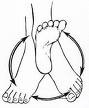

Ankle Circles – 10 each direction on each foot.
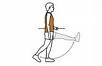
Leg Swings – Swing leg front to back and then side to side. 10 each direction on each leg.
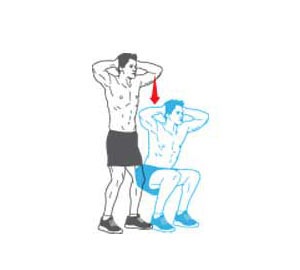
Squats – 12 body weight squats. Maintain a nice straight back; go only as low as comfortable. Stance should be just outside shoulder width.
Arm Swings – giant arm swings – move through as full range of motion as possible and pain free. 10 swings in each direction.
These few warm ups will take about 5 minutes to do and will just help prepare your body for the job ahead. Remember to use good body mechanics as well. If you must lift, lift from the hips and not bent over at the back.
Remember that gardening is exercise and if you spend 8 hours in the garden you will most likely feel some sore muscles the next day. If you have had a long day gardening, a hot bath with epsom salts, a session with your foam roller if you have one, will go a long way to alleviating some of the aches you may feel the next day. Now you are ready to take on the back yard. Enjoy.
Till next time,
Narina
"Monitoring, Mentoring, Motivation"
Related Posts:
The Education in Youth Sports
The hockey season is coming to a close for my son. This season I was the team manager. As the team manager I received an eye opening dose of the education provided to our youth by the sports they play. The experiences these boys had mimic life and taught them valuable lessons (positive and negative). Parents heed my warning that part of what follows in this article is explicit, so stop reading now if you get easily offended. At the same time, if you can handle it and want to find out how you can leverage youth sports to shape the character of your son or daughter, by all means read on!
When children play competitive sports suddenly alot is asked of them. They have a practice schedule they need to adhere to, a game schedule to meet, a dress code to follow and school obligations that must be meshed into all of that. Finally, they are asked to show respect for their coaches, managers, teammates and opponents. When they join the team they make a commitment to follow through in all of these areas. Failing in any of these areas is quite possibly going to teach them lessons that will stick with them all through their adult life.
The schedule is the first key component. We, as parents, must make our player understand that they must attend practices and keep their grades up. This quite probably will involve making some sacrifices on the player's part. Instead of coming home from school and unwinding by watching television, they will probably need to do their homework or study for tests. This is so they will not miss practice.
Time management is a skill everyone really need to acquire, so why not when we are young? You, as the parent, are the guide and the role model. If you treat practice like it is optional your player will too. If you make appointments at times when a game is scheduled your player will treat obligations as optional events. How do you think your player's future boss will deal with such an attitude?
Respect is probably the most important component of youth sports. Unfortunately, there is generally always a winner and a loser in sports. Lessons can be taught in both victory and defeat. Don't shirk your responsibility as a parent. Teach your player that they need to respect te game, th coach, the team officials, the league officials and their opponents. Looking the other way will only result in disaster.
I started this article by mentioning that I am the manager of my son's hockey team. Now I will tie it into the rest of this article.
Yesterday the team played for the Southern California championship. My own son had to learn a tough lesson right away. He sat on the bench. This happened despite the fact that he was told the goaltender who worked the hardest during the week and had the right attitude before the game would be the starter. The other goaltender was goofing around, not paying attention at dry land and generally not into the game, but he played anyway. Could this have been the impetus for what would happen later?
The game progressed slowly. Our team just did not have the hop in their step that we had become accustomed to and the other team took advantage. They managed to score 2 goals on us while we were completely unable to score on them. The final buzzer sounded and we had lost the game. As is the tradition, the boys lined up for handshakes. Our goaltender, the one who played in the game, went down the line and greeted every single opponent with “Fuck you!” Then, during the trophy presentations, that same goaltender was giving the middle finger to fans of the winning team. As they received the trophies they were to go down the line of the opposing team and shake hands again. As this happened, our goaltender and one other player looked at several players and after hearing “Good game” from the opponent replied “Fuck you, nigger!” to those players. I will remind you that these are 15 and 16 year old boys we are talking about. These same players took their 2nd place trophies and threw them at the wall, breaking them into pieces right in front of three board members from our hockey organization.
I progressed down to the locker room to make sure my own player was doing ok. I sat down next to him and the coach locked the door. He began his speech by saying “I want everyone to stop what they are doing. No more taking off gear until I am completely finished with what I have to say.” He then began telling them that their behavior on the ice after the game was reprehensible. He told them that they needed to lose with dignity and that they should always treat their opponents with respect. He said that anything else was unacceptable.
As the coach spoke I noticed that the goaltender who had played the game was continuing to take off his gear. He wasn't trying to be quiet either. It got so loud that I could no longer hear what the coach was saying. After watching for a good 60 to 90 seconds, I spoke up and said “Josh, coach asked everyone to stop taking off their gear until he was done. He isn't done, so could you please stop what you are doing?” Without hesitation, Josh responded “Why don't you shut up? You are not the coach, you are just the manager!” I then responded back with “It doesn't matter if I'm a coach or a manager, you were asked to stop removing gear until the coach is done, he is not done, so I am now asking you nicely to stop taking off your gear and show the coach some respect.” Without hesitation again, Josh responded “Fuck you!” I paused as I waited for the coach to say something. After a few seconds of complete silence in the locker room and nothing from the coach, I responded to Josh. “What did you just say to me?” I said in a stern tone. Josh was tongue tied this time. “You have no right to talk to me that way and it had better never happen again.” He then responded “Why don't you fuck off?” It is at this point that I lost it. I could feel the anger surging through my body. I responded “Josh, you'd better just shut the fuck up because your attitude is going to get you in huge trouble.” The coach finally stepped in and said “Mike, you should leave the locker room so I can deal with this.” I got up and started to go when Josh's friend on the team spoke up and said “What kind of manager are you that you would cuss at a kid?” I ignored the comment, but it underscores my the point I am trying to make.
It is important for you to note that Josh responded to me without hesitation. He did not think about cussing out an adult. He did not consider what he was saying. He said what he said because that's what he wanted to say. The ramifications of those actions didn't matter to him. His friend was no different. He was going to stick up for his buddy no matter what the consequences, even though I'm sure he knew (and later it was confirmed) that what his buddy did was dead wrong.
This boy (the goaltender) has had trouble all season long. He shows up late for games. He skips practices. He has gotten 4 penalties during the season, even getting involved in a huge brawl at a Christmas tournament. Despite this behavior he was rewarded with playing 3 championship games this season. My own son worked hard each time to get the team to those championship games. He played in 5 must-win games this season and played well enough to get his team the win each time. Each time the other goaltender was given the next game.
There were lessons learned by both goaltenders in this situation. The one, Josh, learned that he can do and say whatever he wants and he will still get to play the “big games.” My own son learned that even if he works the hardest, performs the best and has the support of 90% of the families on the team, he still won't get the rewards he deserves. Now, I am not sure how Josh's parents handled him after the game, so I cannot tell you whether or not Josh will learn anything positive from his confrontation with me, but I can tell you how I handled it with my own son.
First, I told him that I was very proud of how he acted. He was told 1 minute before game time that the decision was to play the other goaltender. He didn't disrespect his coach. He put his gear away and sat on the bench. After the game he showed respect for his coach, his team and their opponents. He went off the ice without throwing a tantrum. I reinforced his behavior by emphasizing how much I respected him for his attitude. I let him know that in life you will not always get the rewards you feel you deserve. Many times you won't get the rewards you truly do deserve. However, you still have to act with dignity and respect because at the end of the day, that's all you have left–your character depends upon it.
Next, I let him know that he will eventually need to speak to his coach about his feelings. He informed me that he had lost alot of respect for his coach–not only for not playing him after saying the player with the best attitude would play, but also for his coach's failure to properly handle the situation in the locker room. Matthew told me “Dad, it should have been the coach telling Josh to stop undressing, but as usual, Josh can do whatever he wants and not get in trouble for it.” Thus, I made it clear to Matty that he would need to talk to his coach and that he would need to be honest. At the same time, I emphasized that he would still need to approach that situation with respect and dignity. The lessons were clear here and he still has to deal with the coach situation.
As parents we cannot sit idly by and let these things go. I had to walk the fine line between parent and team official. However, at no point was I going to allow my principles to be compromised. Thus, the impetus for this article should be clear. Don't shirk your responsibilities. Failure to correct poor behavior will result in major issues for your children later in life. Failure to guide them in the proper way to handle things will result in a long string of failed jobs and failed relationships as they move forward in life. It is our job to use these types of situations to teach our children the right way to behave. Many parents avoid it because it means a confrontation. I say you should embrace that type of confrontation as it is molding your child into a better human being.
Related Posts:
How, What and Why…
The topic of today's article is exercise, adaptation and how that relates to how, why and when to change an exercise program. First, we should discuss a little physiology so you getter a better understanding of how the body responds to the "stress" of exercise. Remember that not all stress is bad. Stress in the form of exercise is what our training program is all about. In physiology there is a response from the body to exercise. This
is called the SAID Principle. This means:
*** Specific Adaptation to Imposed Demands (SAID) ***
The demands of the exercise program (weight training for example) would be the stress involved. The "imposed demands" of the weight training program would bring about specific adaptations by the body. This would translate to muscle growth resulting in strength gains, leaner body composition, improved range of motion as well as a host of other benefits associated with exercise.
Adaptation is specific to:
1) Mode – this is the type of training (strength training, aerobic training for example). This also involves more specifically the movement patterns, muscles involved, range of motion.
2) Intensity – this refers to the effort of the exercise, the resistance used, at what speed you move through the exercise as well as the metabolic pathways that are used.
3) Duration – this centers around the number of reps and sets of each exercise you perform in a workout. This also involves the rest between exercises. In an aerobic capacity this may refer to work intervals.
4) Frequency – the amount of recovery time allowed between exercise sessions.
The body requires a certain amount of stress imposed before it will respond with increased fitness (strength, aerobic capacity). If the body is not stressed (to a reasonable limit), it will not respond. In other words, you must have a tolerable amount of stress imposed to elicit a physiological response. The body adapts to this stress by building stronger muscles and once this adaptation has occurred no further response will take place.
Physical training is beneficial only as long as it forces your body to adapt to the stress of the effort involved.
So how does all this physiology relate to your workouts in the gym? One of the most frequently asked questions I get is: when do I change my exercise program?
The Boredom Factor:
This can be a killer for some people. Variety is key. The body does require a certain amount of continuity when learning specific exercises or movement patterns. But that aside it is important to allow some variety in exercise selection to keep the program fresh.
Reps/Sets/Training Tempos:
This is a topic for a whole newsletter in itself. But suffice to say you don't want to be doing the same number of reps and sets with the same tempos indefinitely. Not only are we looking at the boredom factor again, but the body will adapt to this quite quickly. The classic 3 sets of 10 repetitions is a killer to the body if done too long. Change up your reps, sets and training tempos every few workouts. Mix it up a little; vary the number of reps you perform. Vary the number of sets.
Rest Intervals:
This is another way of changing the stress imposed. Mix up the rest/recovery time between exercises. Perform exercises in a circuit; perform supersets or giant sets.
How often:
An exercise program should be constantly evolving. Even within specific parameters of a given program there is always room to make minor changes. The key is to keep the body forever guessing and having to adapt new stresses. Each workout you should be striving to make progress, looking to see how you can improve each exercise, each set. The weights chosen for a particular exercise should be changing as well. Look to see
where you can increase the weight. If you are performing all your reps/sets with a given weight, it is probably time to increase the weight.
Overall program design should be reviewed and changed about every 3-4 months. If you are still doing the same program now that you were doing before Christmas, it is time for a change.
So in a nutshell:
1) Body adapts to stress – this is good
2) Exercise is stress – this is good
3) Each workout strive to see where you can improve
4) Don't perform the same workout longer than 3 months
5) Change the reps and sets every few workouts
6) Incorporate circuits, super sets, giant sets to add variety
7) Always look to improve – each workout!
8) Get help from a fitness pro to keep you always moving forward
Related Posts:
- « Previous Page
- 1
- …
- 3
- 4
- 5
- 6
- 7
- …
- 10
- Next Page »